
Rome began as a defensible patch of high ground beside the only easy crossing of the Tiber for miles, which is a very ordinary reason for a city to exist. Everything after that is less ordinary.
Kings, and then no more kings
The Romans dated their founding to 753 BC and told a story about twin brothers raised by a she wolf, which is the sort of origin a people invents when it wants to be understood as tough rather than respectable. Seven kings followed in the telling. The last of them, Tarquin the Proud, was thrown out in 509 BC, and the Romans replaced the throne with a system built entirely around making sure no one man held power for long: two consuls instead of one, each able to veto the other, both out of office within the year. They kept the arrangement for four and a half centuries and it left them with a horror of kingship that shaped everything they did afterwards, including what they eventually did about Caesar.
Carthage, and the habit of not stopping
The Republic's rise runs through three wars with Carthage. The second is the famous one: Hannibal crossed the Alps with an army and elephants in 218 BC, won a famous victory over a far larger Roman force at Cannae, and then spent fifteen years camped in Italy unable to finish the job, because Rome simply declined to accept the result. That refusal is the whole Roman character in one campaign. By 146 BC Carthage was gone and the Mediterranean had turned into a Roman lake.
Caesar and the Tenth
Into a Republic sagging under its own conquests came Gaius Julius Caesar, who raised Legio X in Spain in 61 BC and made it the legion he trusted above all others. When his own army wavered at Vesontio at the prospect of fighting Germans, he announced he would march on with the Tenth alone if he had to, and shamed the rest into following. The Tenth was with him in Gaul, at Alesia, in the surf off Britain, and at Pharsalus. In 49 BC he took a legion across the Rubicon, the small stream that marked the edge of Italy, and ended the Republic; the Senate answered fifteen years later, on the Ides of March, in the way the Republic always answered a man who looked like a king.
The empire, and the long quiet
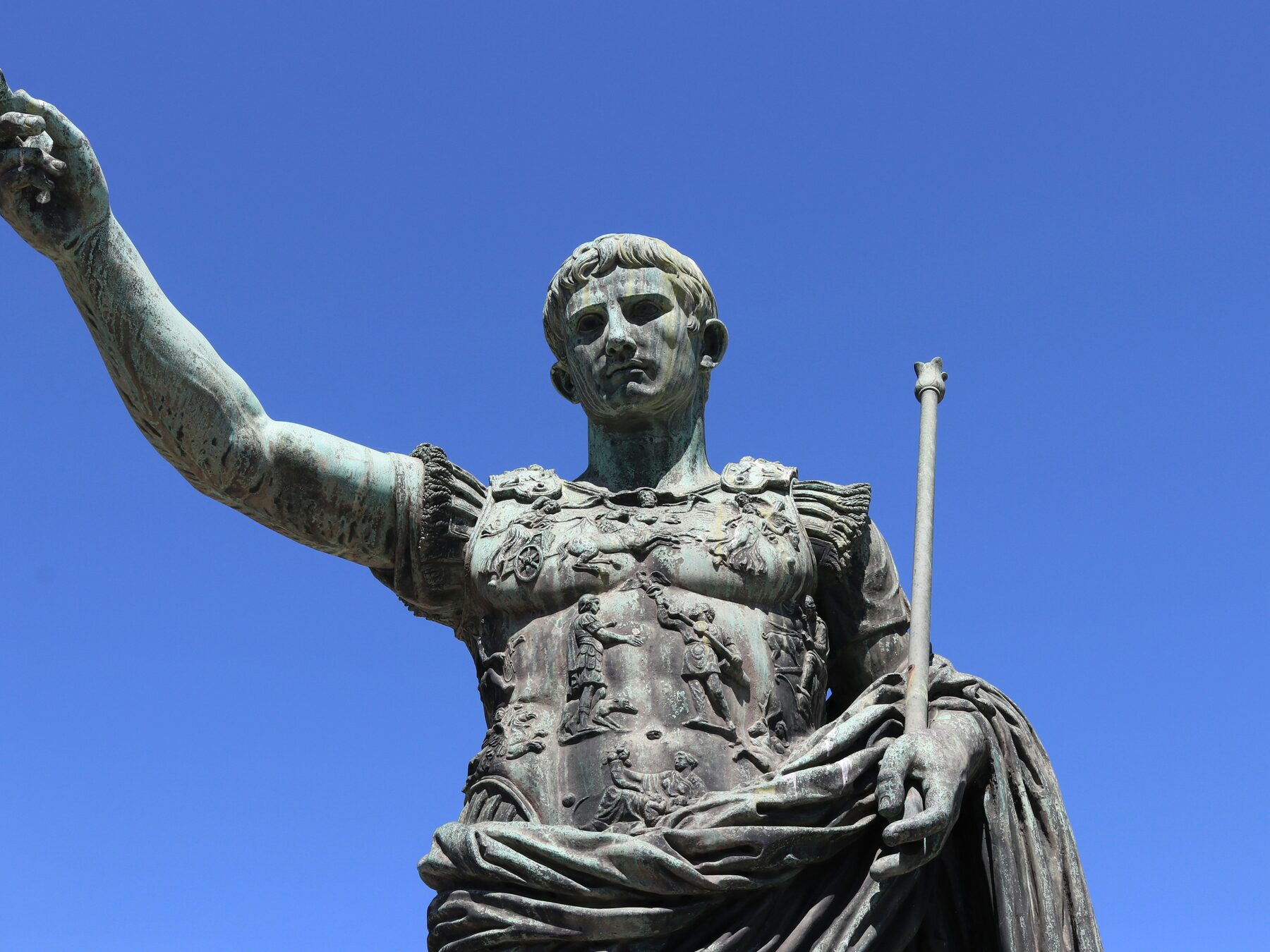
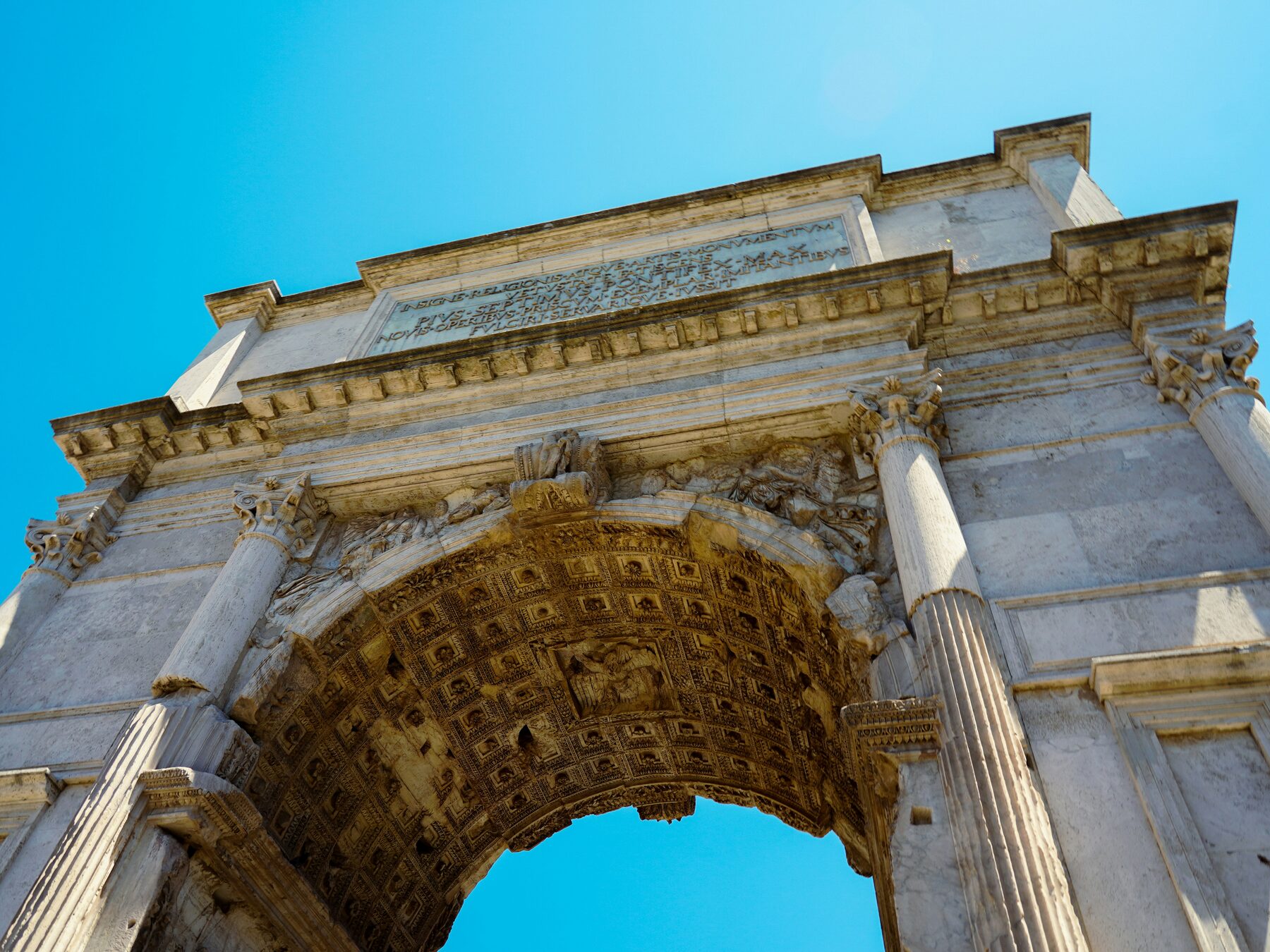
His heir Octavian won the wars that followed, took the name Augustus, and did something cleverer than declaring a monarchy: he kept every republican title and office in place and simply held enough of them at once that it no longer mattered. What followed was the Pax Romana, two centuries in which the Mediterranean world was more peaceful, better connected and more prosperous than it would be again for a very long time. Under Trajan the empire reached from the Solway Firth to the Persian Gulf, and a citizen could travel that whole distance on Roman roads, in one currency, under one law.
The roads, and the country outside the walls
Behind all the history is the land. The Ager Romanus, the farmed country ringing the city, fed Rome and was cut across by the roads that left it: the Via Appia running south to Brindisi, laid in 312 BC and still walkable in long stretches of black basalt, lined with the tombs Romans built along it, because they laid their dead beside the roads out rather than inside the walls. Aqueduct arches march across the same fields on their way in. Umbrella pines, dry grass, sheep, broken travertine, and a horizon of hills. It is one of the most painted landscapes in Europe and one of the least changed.
The end, and what did not end
The west came apart slowly and then all at once: pressure on the frontiers, currency debased, the capital moved, the army increasingly made of the people it had been raised to fight. In 476 a Germanic commander deposed the last western emperor and did not bother replacing him, which tells you how little the office was worth by then. The eastern half carried on from Constantinople for another thousand years.
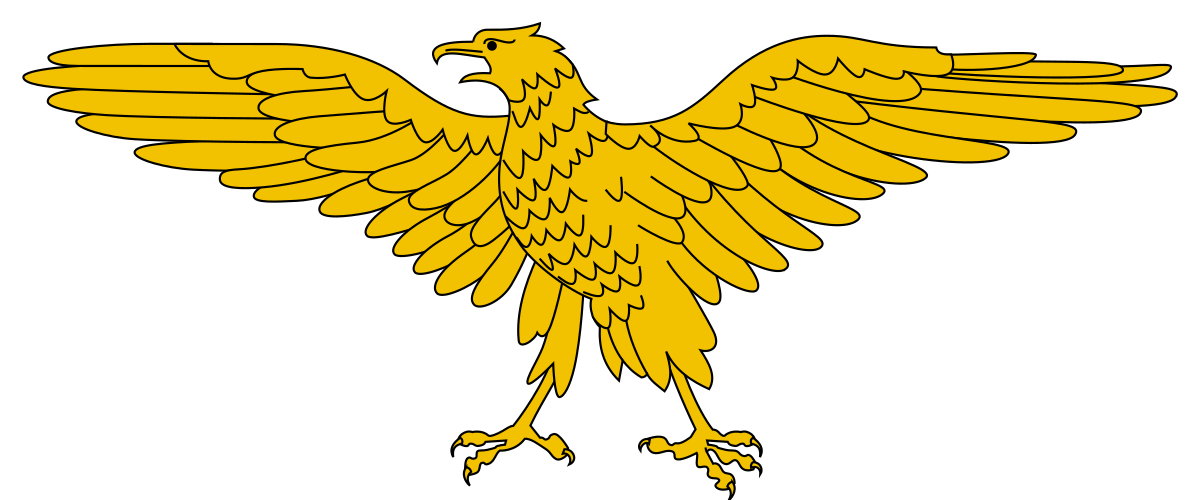
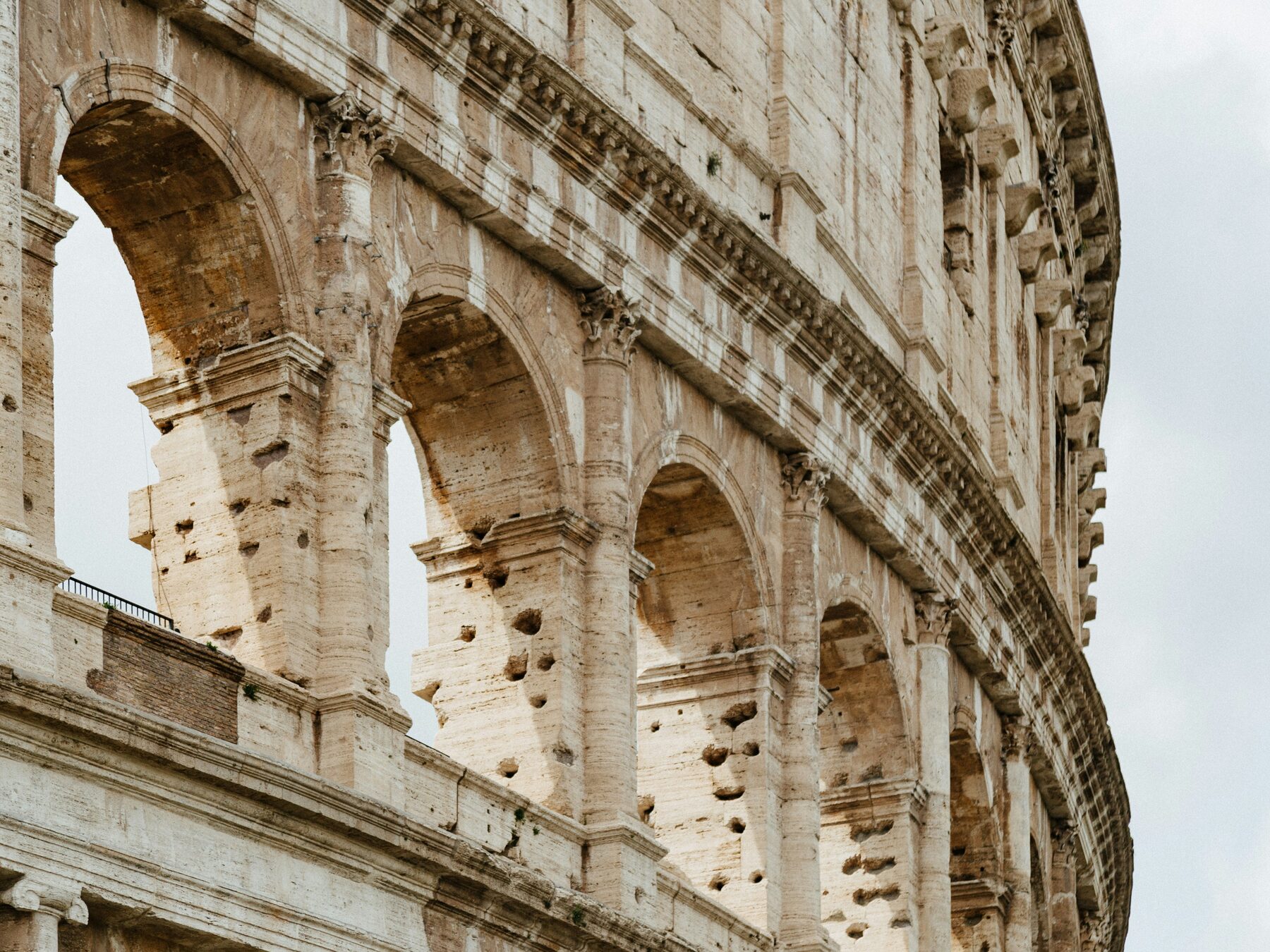
What did not end is the part you can still stand in. The roads, the law, the calendar, the alphabet, half the vocabulary of every romance language and a good deal of English, and the eagle, which every empire since has borrowed the moment it wanted to look permanent. That is the Rome behind your enrollment. It ran out of soldiers long ago. It never quite ran out of the idea.