
The rank at the bottom of the ladder is the one the whole thing was built out of. Not the general, not the centurion, not the eagle: the ordinary soldier, the miles, of whom a legion held some five thousand. This page is about what that man actually did. If you came for where the word comes from, that is a different story and we have written it as The Origin of the Legionary.
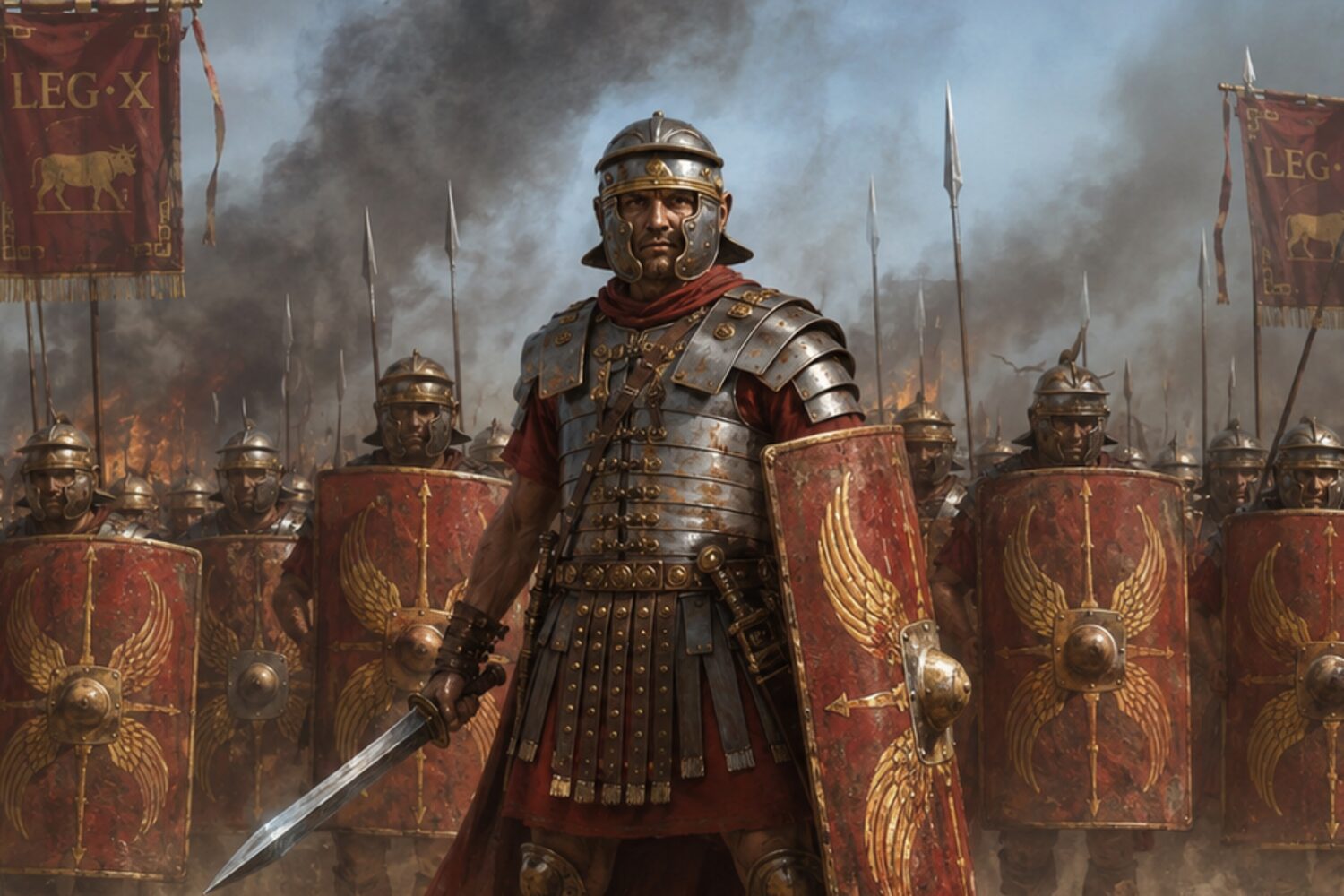
It starts with an oath
A recruit became a soldier by swearing the sacramentum. Not signing: swearing, out loud, in front of the standards, and the word is the same one Latin uses for a religious obligation. It bound him to follow where he was led, to turn up, and not to leave the ranks except to fetch a weapon, strike an enemy or save a comrade. Under the Empire the oath was renewed each year, and it was sworn to the emperor by name.
It is worth being clear about what that made him, because it is the opposite of the modern arrangement. He was not employed. He was sworn.
What he carried
Body armour, either mail or the banded plate everyone pictures. A curved rectangular shield, the scutum, plywood and leather and a metal boss, heavy enough to be a weapon in its own right. A short stabbing sword, the gladius, worn high on the right. A dagger. Two pila, throwing spears with a long iron shank.
The pilum is the piece of kit worth pausing on, because Caesar explains in the first book of the Gallic War what it was for. Thrown into a shield wall, the shanks punched through and then bent, and a shield with a bent spear hanging out of it is no longer a shield: the Helvetii, he says, ended up throwing theirs away and fighting uncovered. The weapon was designed to ruin the enemy's defence rather than to kill him, which is a very Roman piece of engineering.
On top of the fighting kit came the rest of his life, carried on a forked pole over the shoulder: cooking pot, rations, a saw, a basket, a length of rope, two stakes for the palisade, and the entrenching tools. Modern reconstructions put the whole load somewhere around thirty kilos. Nobody marched light.
The camp, every single night
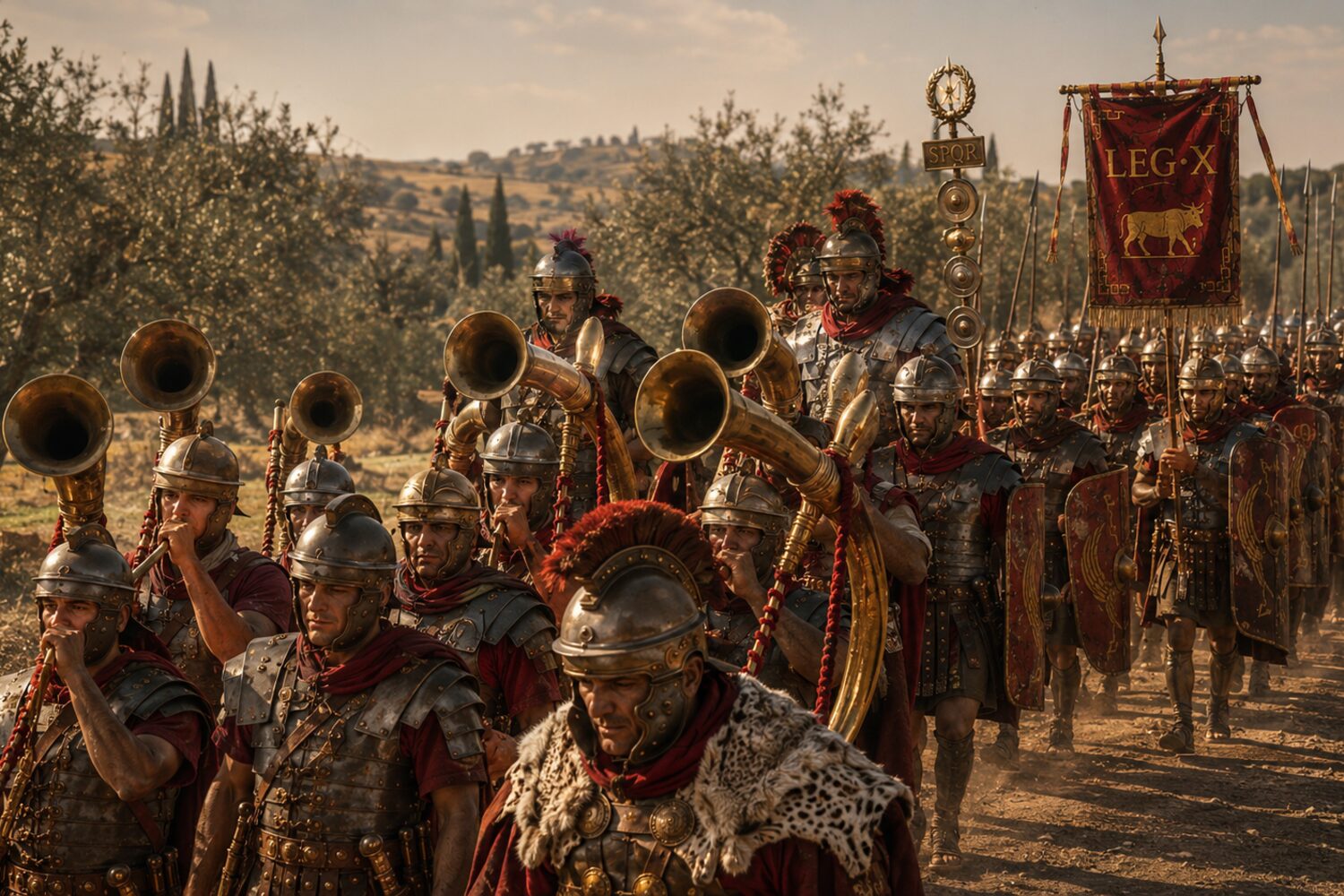
Here is the fact that says most about the Roman army, and it is the one people find hardest to believe. At the end of a day's march, the legion did not make camp in the ordinary sense. It built a fort. Ditch dug, earth rampart thrown up behind it, stakes set along the top, gates and streets laid out to the same plan every time, so that a man could find the commander's tent in the dark in a country he had never been in before. Polybius describes the whole procedure in his sixth book, and it was done at the end of the march, before anyone ate.
Then it was taken apart the next morning and done again that evening. An army that does this is not primarily a fighting force. It is a construction crew that can also fight, and it is the reason Rome could operate a thousand miles from Rome.
The line
In contact, the legionary's job was narrow and rehearsed. Close to throwing distance, put both pila into the enemy's shields, then draw and go in behind your own. The short sword is a short sword on purpose: shoulder to shoulder there is no room to swing, and the man is trained to work in the gap between his shield and the shield of the man to his right.
What made it survivable is that the fighting line was rotated. Men fought in the front rank for a matter of minutes and were relieved, which is why Roman infantry could hold a line for hours against an enemy who had committed everyone at once. Discipline here is not a moral quality. It is a shift rota under fire.
Eight men and a mule
Underneath the legion, the cohort and the century sat the contubernium: eight men who shared a leather tent, a mule, a millstone and a cooking pot, and who dug, marched, ate and were punished together. Ten of those made a century of eighty, and sixty centuries made the legion. Ask a Roman soldier what he belonged to and the honest answer is the seven men he ate with.
Above him the ladder was real and it was climbable: immunis for a man with a trade, then tesserarius, optio, signifer, and then the centurionate, which a ranker could genuinely reach. The terms of service, the pay and what waited at the end of twenty five years are set out on the origin page.
The Tenth
The legion on your certificate is Legio X Equestris, raised by Caesar in Spain in 61 BC and the one he trusted above all the others. When his army lost its nerve at Vesontio he announced that he would go on with the Tenth alone if he had to, and the rest of the army found its nerve again rather than be shown up. When his ships stopped in deep water off Britain and nobody would jump, it was the Tenth's eagle-bearer who went over the side first. Both stories are Caesar's own, in the first and fourth books.
What it means on your certificate
A Legionary enrollment inscribes Legionarius and the name you choose into Legio X Equestris, in the old manner, sealed with the eagle. It is the rank the whole army rested on, and it is where every one of the other two started.
It is an honorific and a souvenir, bought for the pleasure and the story of it. It confers no rank, no service and no entitlement of any kind, it is not evidence of military service of any sort, and it should never be presented as such. Our notice sets that out in full and is worth the two minutes before you buy.